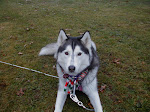
Dear Khyra and Phyll,
 “It’s Good to Give…This Season!” What better way to celebrate the holiday season then through Bark It Furward, a program created to raise awareness and funds for Canine Assistants, a non-profit organization that trains and provides service dogs for children and adults with physical disabilities and the Milk-Bone® brand’s long-time charitable partner since 1997. For nearly 20 years, Canine Assistants has provided 1,000 service dogs to people across the country, giving them the chance to have more independent lifestyles.
Many people in need of a service dog depend on Canine Assistants to pay for the lifelong care of the dog. Without the help of any government funding, Canine Assistants relies on the generosity and private donations made by philanthropic partners, like Milk-Bone®, to help pay for the training of these special needs dogs. In an effort to help care for and train more assistance dogs for recipients across the country, Milk-Bone® is asking you to rally around Canine Assistants.
Bark It Furward was created by Milk-Bone® brand to educate others about the inspiring work being conducted by Canine Assistants. By joining the Bark It Furward movement, you can help raise awareness and much needed funds to provide assistance dogs for people with disabilities.
What Do I Need To Do?
All you need to do is post about the work that Canine Assistants is doing to provide assistance dogs to children and adults with special needs. For every comment you receive on your blog, Milk-Bone® will donate $1 to Canine Assistants! The blogger with the most comments will be given the opportunity to interview Jennifer Arnold, The New York Times best-selling author and founder of Canine Assistants. The winning blogger will be able to speak to Jennifer about her book, her role in the PBS documentary, “Through a Dog’s Eyes,” the organization, how it was started, her training methods, the matching process, and, of course, the puppies!
Bark It Furward takes place between November 18, 2010 and January 4, 2011. We have enclosed information about Canine Assistants and the Milk-Bone® brand’s partnership with the organization that you may use in your blogs. You may also find additional information at CanineAssistants.org and MilkBone.com.
I posted…Now what?
After you post about the program, please send us a link. We will then ask you to provide us with your contact information so that we can notify you if you win the interview with Jennifer Arnold. At the end of Bark It Furward, we will reach out to you regarding the total donation and the interview opportunity.
Thank you for joining the Milk-Bone® Bark It Furward movement. Your efforts this holiday season will help raise awareness and money for the Canine Assistants organization, forever changing the lives of people with disabilities.
Please let us know if you have any questions.
Thank you!
About Canine Assistants
Canine Assistants® is a non-profit organization, founded in 1991, which trains and provides service dogs for children and adults with physical disabilities or other special needs. In addition to physically assisting those with disabilities, Canine Assistants service dogs are instrumental in removing many of the barriers faced by the disabled in today's society.
Service Dogs:
Canine Assistants service dogs assist children and adults with physical disabilities or other special needs in a variety of ways. Some of the tasks the dogs perform include turning lights on and off, opening and closing doors, pulling wheelchairs, retrieving dropped objects, summoning help and providing secure companionship. While all of these functions are vitally important in helping a person obtain greater freedom, perhaps the most impressive gift the dogs provide is social, rather than physical, in nature. The dogs eliminate feelings of fear, isolation and loneliness felt by their companions. One Canine Assistants recipient made the value of this gift quite clear when asked by a reporter what she liked most about her service dog. Immediately, she responded, "My dog makes my wheelchair disappear."
Most Canine Assistants service dogs are born, raised and trained at the Milton, Georgia facility, while some are occasionally adopted from local organizations or breeders. The majority of the service dogs are retrievers, including both Golden Retrievers and Labradors.
Companion Dogs:
Like service dogs, companion dogs also serve to assist children and adults with physical disabilities or other special needs. Companion dogs work primarily in a recipient's home, assisting with tasks around the house and more importantly, contributing to the emotional well being of the person.
Seizure Response Dogs:
In addition to service dogs and companion dogs, Canine Assistants also trains and provides seizure response dogs for certain recipients. As with some of the service dogs, these dogs are adopted from various organizations and selectively screened for personality, temperament and general health. Following general training, seizure response dogs are trained to perform one of the following behaviors, depending on the recipient's need: remain next to the person during the course of a seizure, summon help in a controlled environment or retrieve a phone prior to the seizure when indicated by the recipient. Certain dogs may even develop the ability to predict and react in advance to an oncoming seizure once they are placed with their recipient.
Canine Assistants Q&A
General Information
What is Canine Assistants?
Canine Assistants is a non-profit organization that trains and provides service dogs to enhance and improve the lives of children and adults who have physical disabilities, seizure conditions or other special needs.
When was Canine Assistants founded?
1991
Who founded Canine Assistants?
Jennifer Arnold
How many dogs are placed each year?
Canine Assistants currently places between 80-100 dogs annually.
How many dogs are on the farm?
Around 120 at any given time.
How many dogs have been placed since 1991?
Approximately 1,000.
About Our Dogs
What is a service dog?
A service dog is one type of assistance dog that primarily provides physical or mobility assistance.
What types of assistance dogs exist?
Guide, hearing, service, seizure response and emotional support are all types of assistance dogs.
What types of assistance dogs does Canine Assistants train?
The organization primarily provides assistance dogs for people who have mobility difficulties, seizure response dogs for those who have epilepsy and diabetic response dogs.
What is a seizure response dog?
A seizure response dog is another type of assistance dog that assists by responding in a specific way AFTER a person has a seizure to provide help. For instance, the dog may lay by the person during the seizure, retrieve a cordless phone for the person, alert another person (if available) or press a medic alert button.
Can dogs predict or react in advance of seizures?
Yes, but it is a natural ability of the dog that scientists still do not understand and one that cannot be trained or selected. Anecdotal research shows that the dogs are likely responding to an olfactory cue or a certain type of smell. Canine Assistants cannot train our dogs to alert to oncoming seizures. Yet, once a recipient and their dog develop a strong bond, many Canine Assistants seizure response dogs (about 87%) do go on to PREDICT or react in ADVANCE of a seizure, usually with an unusual behavior, such as whining, pawing, pacing, jumping, barking, etc. This may happen a few to several minutes before a seizure, which can be quite helpful for individuals who do not experience an aura or feeling that the seizure is coming on.
What breeds of dogs are trained at Canine Assistants?
Goldens and Labs primarily, although Canine Assistants does have Golden and Lab mixes, as well as other Golden mixes.
Where does Canine Assistants get their dogs?
Canine Assistants has their own breeding program. On-site veterinarian, Dr. Kent Bruno oversees the entire program to ensure the dogs are healthy, in good disposition and are capable of caring for a recipient. Only dogs that are breed at Canine Assistants become service dogs. Because training starts at an early age, just two days old, Canine Assistants has to ensure that the dogs have not been predisposed to any outside behaviors or experiences.
At what age do the dogs start training?
Puppies begin their training at two days old.
How long does it take to train a service dog?
A year and a half.
What commands do they learn?
The dogs learn a wide variety of commands, including opening and closing doors, picking up dropped items and turning on and off lights.
Why do you let people pat your dogs in public?
Canine Assistants allows each recipient to make decisions regarding any potential interactions between his/her dog and people in public. If recipients feel that allowing someone, who politely asks to pat his/her dog, will not cause any negative consequences for any of the parties involved, including the dog, then Canine Assistants feels such interaction is perfectly acceptable. Some programs do not allow their dogs to be touched by people in public fearing that the dogs will become distracted in the present time which may cause them difficulties in the future. Canine Assistants believes that each recipient is capable of determining for him or herself whether or not distraction is a concern. Part of the benefit of having an assistance dog is the increased social interaction of the recipient.
Applying for a Service Dog
What is the application process?
Applications can be downloaded via the website, http://www.canineassistants.org/, on the Applying for a Canine Assistants dog page. Once received, the Recipient Coordinator will contact the applicant within 4 to 6 weeks to conduct an interview and discuss the application. If it is determined that a service dog or seizure response dog will be of benefit to the applicant, they are then placed on the waiting list.
How many people are currently on the waiting list?
Over 2,000
How long is the waiting list?
Unfortunately, the waiting list to receive an assistance dog can span 1 to 5 years and can sometimes take even longer. Without the support and donations of individuals, foundations and corporations, Canine Assistants would not be able to train and care for the 80+ dogs they place throughout the year.
How are applicants placed on the waiting list?
The waiting is need-based; those with the greatest need go to the top of the list. Each applicant is evaluated based on how much a dog could do to help physically, emotionally and socially. Canine Assistants encourages those who need dogs to apply in spite of the long waiting list. We recommend that applicants apply to a number of organization
Are there age restrictions?
Canine Assistants will place dogs with children usually starting around 5 to 7 years of age. Yet, families with younger children are encouraged to apply as soon as possible, as their child will usually be eligible for a dog after time spent on the waiting list.
Who is eligible to apply?
Anyone who has a physical disability, seizure condition or other special need (i.e. diabetes, autism.)
Can dogs be placed with applicants that have other pets at home?
Yes.
How long is a dog in service?
Average age of retirement is about 10, give or take a year or two.
What happens after a dog retires?
Canine Assistants discusses the situation with the recipient and/or family to determine what is best for them. Most dogs remain with the recipient or family as they have become an important part of the family after many years. If the recipient or family is interested in applying for another dog, they are placed on the waiting list and placed with a dog as soon as possible.
Is the Canine Assistants vet clinic open to the public?
No. It is specifically for Canine Assistants animals. Any recipient who is able to easily travel to the Canine Assistants vet clinic can receive veterinary care free of charge. For those who cannot visit the vet clinic, arrangements are made to cover any veterinary expenses if needed with the recipient's local veterinarian.
Information About Our Facilities
How large is the Canine Assistants farm?
18 acres
What other animals are on the farm?
Two miniature donkeys (Lucy and Brooks), two goats (Oreo and Nubbin), eight horses, one cat in the main office (Marabel), one cat on the farm (Stud), two cats in the puppy building (Fishflake – brown tabby; Muchacho – black) and 1 rabbit.
What is the purpose of the animals on the farm?
Many of the animals on the farm have been rescued (i.e. most, if not all, of the horses) and serve as a wonderful opportunity to provide Animal Assisted Therapy (AAT) opportunities for special needs groups that come to visit.
Volunteer Opportunities
How can I become a volunteer?
Canine Assistants has both a local volunteer and a national volunteer program. To learn more about volunteer training and opportunities, visit the Canine Assistants website, http://www.canineassistants.org/. Children under the age of 18 are permitted to accompany their parents to training classes and volunteer activities, providing the parent is the primary volunteer.
Financial Questions
If a person cannot afford a dog can they still receive one from Canine Assistants?
Yes! Canine Assistants operates on a needs basis and many of the people who need a service dog cannot afford one. Through donations made by individuals and corporations such as Milk-Bone, Canine Assistants is able to cover the training of each service dog. In addition, food and medical costs for the life of a placed service dog may be provided if such financial assistance is needed.
How much do your dogs cost?
Nothing! Canine Assistants does not charge for any services. Canine Assistants creates sponsorships with companies like Milk-Bone to provide training for the service dogs and to cover aftercare costs, including vet care and food, for those who need the financial assistance. Canine Assistants uses the support of individuals, foundations and corporations to fund the sponsorships and programs.
If I make a donation how will my money be used?
Canine Assistants has a very low overhead, about 5%, which means that when you donate to the organization 95% of your money goes directly to help train, feed, and care for the dogs. It is also used to cover the travel, lodging, and food costs for an individual to come to the Canine Assistants facilities, in Milton, GA, to train with and receive their service dog. It is very important to Canine Assistants that all funding is directed to where it is needed most and that the wishes of our donors are met with honesty, confidence and transparency.
Do you receive government funding?
No, Canine Assistants only accepts private donations. While the organization never wants to turn donations away that would help an individual in need receive a dog more quickly, Canine Assistants does not feel it is right to take tax dollars from individuals who do not know they are giving to our organization. Therefore, Canine Assistants solely relies on the generosity of individuals, foundations and corporations, such as Milk-Bone, to fulfill their mission.
What is a service dog sponsorship?
Service dog and training camp sponsorships are setup to insure no monetary costs are passed on to the recipients. Since Canine Assistants does not charge anything for the services provided, they must raise all funds necessary to support the placement of the service dogs. Service dog sponsorships are instrumental in covering the costs associated with training, boarding, lifetime medical care and placement of a service dog with an individual who has a physical disability or other special need.
What is a training camp sponsorship?
Training camp sponsorships assist in covering food, lodging and transportation expenses during each two-week camp. When an applicant reaches the top of the waiting list, Canine Assistants assigns them to a two-week training camp where the individual will meet and be trained to work with his or her new best friend. Canine Assistants currently conducts six training camps per year, with an average of twelve to fourteen recipients per camp. During these two weeks, the recipients attend lectures on dog management, participate in training sessions at the facility and go on numerous outings to venues of public accommodation such as restaurants, malls and schools to practice handling skills in public.
Do you accept dog donations?
No. If you are interested in donating your dog to an assistance dog organization, please contact the Delta Society to navigate their comprehensive directory of service dog organizations throughout the country. If you need to find a home for your dog in the Atlanta area, you can visit the SPOT Atlanta Area Animal Rescue List. This website provides a listing of various rescue groups for pure breeds and mixed breeds alike. If outside of the Atlanta area, please search for rescue groups in your area using a search engine like Yahoo or Google.
Other Questions
Do you ever have dogs that don’t make it through the program that I can adopt?
In rare instances, Canine Assistants will have a dog that will not graduate from the training program and will need to be placed in a private home. However, this happens few and far between and when it does happen, the dogs are usually adopted rather quickly by Canine Assistants staff members or volunteers. Canine Assistants does maintain a list of interested individuals and is happy to place your name on the list if you wish; however, there are currently over 100 people on the list and if you would like to adopt a dog in the near future, it may be best to contact a rescue group. Please visit the SPOT Atlanta Area Animal Rescue List. This website provides a listing of various rescue groups for pure breeds and mixed breeds alike. If outside of the Atlanta area, please search for rescue groups in your area using a search engine like Yahoo or Google.
Where can I get trained to be an assistance dog trainer?
If you are interested in becoming an assistance dog trainer, there are a few organizations throughout the country that can assist you:
Bergin University in Santa Rosa, CA
East Coast Assistance Dogs in Dobbs Ferry, NY and Torrington, CT
NEADS (National Education of Assistance Dog Services, Inc.) in Princeton, MA
Web site: www.neads.org
Phone: (978) 422-9064
Canine Assistants is also in the process of creating a train-the-trainer program. Check with us in the near future for further details.
So, there woo have it!!!
Please paw a khomment so we khan have a GREEN PAPER pawed along fur this pawesome projekht!
When we were furst khontakhted about this worthy event, we were on my Trek to The Tundra - and didn't get a chance to reply - well, the nice lady wrote me us again - I'm SO furry glad she did fur this is so worth it!We shared with her where we had been and such - and also told her that part of my stuffs taken on the trip were my morning Milk-Bones!
If any of woo would like to host this on your blog, please let me know so I khan furward your inFURmation to her - I've already had some paw their interest!We told her it would be a Thursday fur it fit the theme perfekhtly! She SO agreed!
Please furgive the spacing and such - translating a Word dokhument to Open Office and then khopying and pasting to Blogger - well - say no more, eh! PLUS, fur some reason, IE won't let us paste into Blogger but Firefox will!
GO FIGURE!!!
They had provided all this khool literature fur us to use fur the post and we surely appreciated it - it gives a great RUNdown of what all goes in to this most wonderful programme!
Please feel free to share this post with others so we khan show 'em how BLOGGERS ROKHK and get lots of GREEN PAPERS sent from all of us!!!
Thanks in advance fur your help with this! I know many of us have Blogger pals that are members of the noble khanine helper group! We know the wonderful work they do fur their person and fur the awareness they bring out in the real world to what they are khapable of doing!
Hugz&Khysses,
Khyra
PeeEssWoo: I know it is a longer than usual post, but I really felt all of was worth sharing!
 Look what khlipped on by Friday around lunchtime - a magikhal dusting of snow - I would like to think that maybe my Thuglet pal Dorcus sent it from akhross The Rainbow Bridge -
  Resting
 And wondering MUST she pawmit that flashie beastie to intrude on my nap?
 BroFur sunbathing Wednesday afternoon
 Wednesday
 This is one of his favourite spots during this time of day
 Thursday afternoon, he was eyeing up invading The Doggy Nanny's house! Khan woo believe the nerve of some felines - YES, I KNOW MOST OF WOO KHAN!
 Then he went bakhk to hanging here fur a while Thursday afternoon
 What is going on in the khat khranium of his?
 Mom went out a bit later when we khame bakhk from our walk fur she had noticed Butterskhotch was in the top bunk of the khondo - she hopped down and strutted past - this is what Mom got without the sport setting engaged
 Then she taunted Mom by tukhking herself under the one bush whilst BroFur watched from the sidewalk - he's so protekhtive of her YET she's the adventurous one out and around much of the time whilst he just hangs out in the sun - when there is sun to hang out in!


.jpg)




















.JPG)


.JPG)


.jpg)